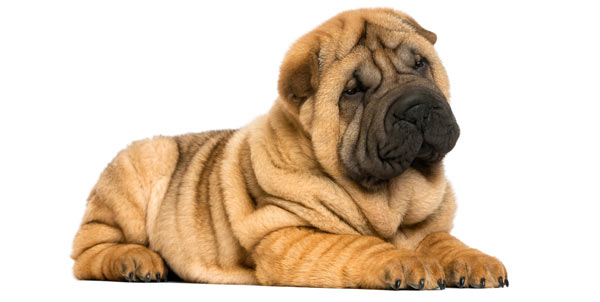
Shar Pei: literally means “sand skin.”
The Shar Pei is an unmistakable-looking dog, famous for its wrinkled skin, unique among dog breeds.
Its roots go back to ancient China, probably as early as the time of the Han Dynasty (206 B.C.-220 A.D.), where it was employed as a guard and hunting dog.
In Kwang Tung province, in the town of Dah-Let, the first specimens also intended for combat appeared: robust, with relaxed skin and rough fur, from which today’s Shar Pei are derived.
The name “Shar Pei” literally means “sand skin,” referring to the roughness of the short, shaggy coat.
The thick, wrinkled skin originally served as protection in fights: even if bitten, the dog could turn around and fight back.
During the Cultural Revolution under Mao Tse-Tung, the breed was in danger of disappearing: dogs were taxed and banned, considered “useless mouths” to be fed.
Only thanks to Hong Kong breeder Matgo Law, who exported some specimens to the United States in 1973, was the Shar Pei saved from extinction.
The official recognition of the breed
In 1985 the official FCI standard finally recognized the breed.
The main variants are distinguished by coat type and color:
- Horse coat (horse hair): short, stiff coat with hair up to 1.5 cm and usually no undercoat
- Brush coat: slightly longer coat, about 2 cm
- Bear coat (bear hair): long coat
However, there are two distinct morphological types: the Meat Mouth and the Bone Mouth.
The differences between Meat Mouth and Bone Mouth
Drier and less wrinkled, the “Bone Mouth” is considered a non-standard variant despite being the original and traditional type from rural China.
The type “Meat Mouth” is the standard recognized internationally, with more pronounced folds and more “meaty” muzzle.
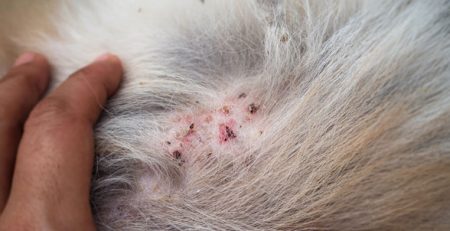
And it is the folds, this excess skin over much of the body, that cause the dermatitis, bacterial infections, and chronic otitis that affect this breed, along with other recurring conditions often linked to genetic defects.
The main diseases of Shar Pei
Also called cutaneous mucinosis, Hereditary Cutaneous Hyalurosis (HCH) is caused by an excess of hyaluronic acid in the skin.
This leads to the formation of blisters or boils, which, if they rupture, expose the skin to infection.
Amyloidosis is one of the most feared complications: the body produces a protein substance,amyloid, which is deposited in tissues-particularly the kidneys-causing chronic kidney failure.
Many Shar Pei suffer from IBD (inflammatory bowel disease) or vitamin B12 deficiency: both conditions manifest with chronic diarrhea, weight loss and digestive difficulties, and require targeted dietary management.
SPAID: the autoinflammatory disease of Shar Pei
SPAID (Shar Pei Autoinflammatory Disease) represents the main hereditary disease of the Shar Pei breed.
It is caused by a mutation in the MTBP gene, the same gene that causes wrinkled skin and predisposes to SPAID.
The gene mutation alters the immune response and triggers chronic inflammation without external infectious causes.
Today a specific genetic test (SPAID test) is available to assess a dog’s individual risk.
Living with a Shar Pei: awareness and prevention
The Shar Pei is a dog with an aloof and independent nature; it is also suspicious of visitors and dislikes other dogs very much.
It also requires special care and attention.
Prevention is key: regular veterinary visits and the use of the SPAID test are essential to ensure a good quality of life for this dog.
To have your Shar Pei dog undergo a complete checkup and regular examinations, contact the veterinary doctors on our staff who are always available to you.
We would also like to remind you that Clinica La Veterinaria is always open h24 every day including holidays and with First Aid service from 8 pm to 8 am.