Blue-tongued dogs: the strange case of Chow Chow and Shar Pei
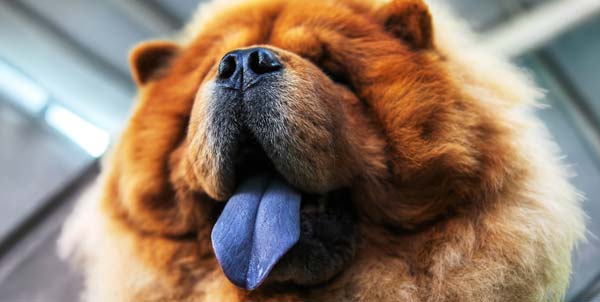
Chow Chow and Shar Pei are two dog breeds distinguished not only by their appearance but also by an unusual feature: they are the only blue-tongued dogs.
The blue tongue coloration of Chow Chow and Shar Pei is attributable to genetic factors.
The genetic factor
The gene responsible for this coloration is different from other dog breeds, where the tongue generally tends to be pink.
The presence of this recessive gene results in an increase in pigment cells at the tongue, which thus takes on the characteristic blue color.
The Chow Chow, in addition to the tongue, also possess blue lips, oral mucosa, gums and palate.
In nature, only one other animal has a blue tongue: it is the shark, an Australian reptile that uses its blue tongue to intimidate predators.
Legends beyond scientific explanation
Scientific explanations have only recently provided an answer to the strange blue tongue phenomenon that has inspired fanciful myths and legends in the past.
Legends about the blue-tongued dog refer mainly to the Chow-Chow.
It is said that when Buddha created the blue sky by coloring it, the first dogs on earth, the Chow-Chow, licked the drops of paint as they fell to the ground.
So they would keep their tongues blue.
Another Tibetan Buddhist legend says the tongue became dark because dogs brought burnt wood to light a sick monk’s fire.
Thus, their language remained dark even in their descendants.
Aesthetic trait and medical condition: hypoxia
With the exception of Chow Chow and Shar Pei, all dogs have pink or reddish tongues, but when this takes on a blue or purple hue, it is not at all normal.
If your dog’s tongue suddenly turns blue or purplish, it may indicate a severe lack of oxygen, known as hypoxia.
Hypoxia can manifest itself in a variety of ways, and blue discoloration of the tongue is known as cyanosis.
Cyanosis: a veterinary emergency
It manifests as a bluish or purplish color not only of the tongue, gums, and mucous membranes but also of the pads of the paws, indicating severe oxygen deficiency in the blood.
Other associated symptoms may include difficulty breathing, fatigue, and lethargy.
A cyanosis is always symptomatic of a serious respiratory or cardiac problem and requires urgent veterinary intervention.
Some poisonings, such as those from toxic plants or chemicals, can also lead to blue discoloration of the tongue.
Which dog breeds are predisposed to hypoxia
Hypoxia can also be caused by nonbreed-related health problems, but it is important to know predispositions for proper prevention.
The dog breeds most prone to hypoxia are brachycephals (such as Bulldog, Boxer, Pug) because of their altered airways.
Other breeds predisposed to congenital or inherited heart or lung problems include the Beagle, Cocker Spaniel, and Dwarf Schnauzer.
For these breeds, it is especially important to take preventive measures and arrange for regular veterinary checks.
Veterinary checks should be conducted at least once a year.
To have your dog or cat checked and for periodic check-ups, contact the veterinary doctors on our staff who are always available to you.
We would also like to remind you that Clinica La Veterinaria is always open h24 every day including holidays and with First Aid service from 8 pm to 8 am.