Samoyed: the dog that always smiles
The Samoyed is a dog breed native to Siberia, and its origins are closely linked to life in extreme climates, where endurance and adaptability were essential.
It is named after theSamoyed people, an ethnic group of nomadic herders who used these dogs to pull sleds, hunt and protect their flocks from predators, representing a key element in their culture.
In Samoyed culture, these dogs were regarded as bringers of good fortune and symbols of friendship, with numerous legends telling of their heroic deeds.
The Samoyed also played a key role in Arctic expeditions, where its stamina and flair proved indispensable.
The recognition of race
English zoologist Ernest Kilburn Scott spent three months among the Samoyed tribes in 1889.
On his return to England, he took with him a male puppy named “Sabarka.”
Later, also a female named “Whitey Petchora” from the western side of the Urals, and a snowy white male named “Musti” from Siberia.
The Samoyed’s qualities as a working dog, combined with its friendly and sociable disposition, led to the breed’s increasing popularity in the 20th century, especially among Arctic explorers and members of European nobility.
The Samoyed has been officially recognized by major international dog associations.
In 1909, theAmerican Kennel Club(AKC) first registered the breed, while in the United Kingdom, the Kennel Club included the Samoyed in its list of dog breeds in 1925.
Morphology of Samoyed Dogs
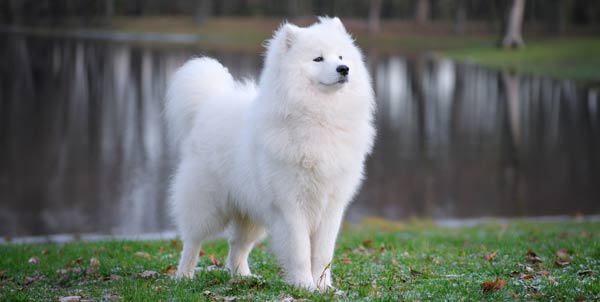
The Siberian Samoyed is a medium-sized dog known for its strong and muscular build.
Male adults generally weigh between 20 and 30 kg, while females tend to be slightly lighter, weighing between 16 and 25 kg, with a height at withers ranging between 48 and 60 cm.
The tail is thick and bushy, coiled on the back when the dog is on the move.
The curvature of the lips and the shape of the mandola eyes give this dog a smiling appearance, from which the expression “smile of the Samoyed“, characteristic of this breed.
The coat of the Samoyed breed
One of the most distinctive features of the Samoyed is its coat.
This dog has a double layer of fur: a soft, insulating inner layer and a longer, weather-resistant outer layer.
The coat color is predominantly white, but can vary from cream to cookie, with some shade variations that may include shades of gray
The coat not only gives the Samoyed its distinctive appearance, but also provides essential protection in the harsh Siberian weather conditions.
Needs regular care; grooming should be done at least once a week, and during molting periods, more frequent grooming may be necessary to manage hair loss.
The character of the Samoyed dog
The Samoyed is known for its lively and sociable nature.
This breed is very attached to its family members and is distinguished by its desire to interact with its humans.
It is especially suitable for active families and can coexist well with other pets due to its friendly and cooperative nature.
However, its intelligence and curiosity require mental and physical stimulation; a sedentary lifestyle can lead to destructive behavior.
Pathologies to pay attention to
Although the Samoyed is generally healthy and hardy, there are some common diseases to which the breed is predisposed.
Hip dysplasia is a condition that can affect a dog’s mobility.
It is essential to monitor joint health through regular veterinary visits and a balanced diet.
Other health issues include eye diseases, such as cataracts and progressive retinal atrophy (PRA), which can affect the Samoyed’s vision.
In addition, Samoyeds can be prone to dermatological problems, mainly because of their dense fur.
Proper hygiene and regular skin checks can help keep your dog healthy.
To have your Samoyed checked, for vaccines and periodic check-ups, contact the veterinary doctors on our staff who are always available to you.
We would also like to remind you that Clinica La Veterinaria is always open h24 every day including holidays and with First Aid service from 8 pm to 8 am.