The house sparrow and its co-evolution with humans
The sparrow, a small bird native to Eurasia and North Africa, has been on a path of co-evolution with humans for millennia.
Since ancient times, in fact, this bird has masterfully adapted to different habitats, finding refuge mainly in agricultural areas cultivated by humans.
Sparrows show themselves adept at sneaking into fields and gardens, where they can easily make themselves at home, taking advantage of the food resources offered by human agriculture.
Its extraordinary adaptability has made it a familiar presence in gardens, parks and everywhere in the city.
How many species of sparrows are there
There are several species of sparrows in the world: the two most common are the house sparrow (Passer domesticus) and the wild sparrow (Passer montanus).
In addition to these, there are other sparrow species that vary according to geographical regions, such as the snow sparrow (Passer montanus nivalis), which inhabits mountainous areas, and several other species found in Asia and Africa.
Overall, it is estimated that there are over one hundred species of sparrows distributed around the world, each with specific characteristics that are adapted to the environment in which it lives.
What do sparrows eat
From a dietary point of view, sparrows are granivorous birds, which means that their diet consists mainly of seeds and grains.
However, they also do not disdain other foods: fruits, insects and small invertebrates are part of their diet, especially during the breeding season when they need protein to feed their young.
How the house sparrow communicates
Communication between sparrows occurs through a series of songs and vocalizations that serve to establish territories, attract mates and maintain social bonds within groups.
Sparrows express themselves through melodious and varied song, which can include whistles, trills and distinctive calls.
Distinguishing the male sparrow from the female
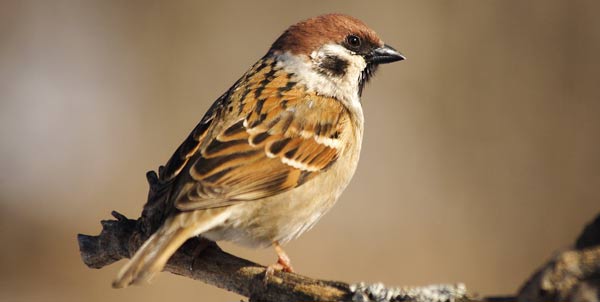
Male house sparrows have more vibrant plumage and more distinctive colors, such as white cheeks and a black spot under the beak.
Females, in contrast, tend to have more uniform and less contrasting plumage, with more gray and brown tones.
Each species has its own repertoire, and males, in particular, using song to attract females and defend their territory from intruders.
Where sparrows make their nests
Sparrows are known for their ability to build nests, which are usually found in sheltered and safe places.
They prefer spaces such as shrubs, trees, and even man-made structures such as balconies, ledges, and recesses in house walls.
The nest is made of varied materials, such as twigs, dry grass, feathers and other natural materials, carefully assembled to ensure the safety and comfort of the babies.
This versatility in choosing nesting sites is one of the aspects that has allowed sparrows to thrive even in urban environments.
Usually the house sparrow is sedentary (i.e., it lives its whole life in the same place) and only moves a few kilometers away from its territory if food is scarce.
In what month of the year does the house sparrow nest.
The nesting season for sparrows varies by region, but generally it occurs between March and July.
During this period, the male sparrow begins to search for his mates and demarcate territories.
After mating, the female begins to build the nest and lays 3 to 5 eggs, which she incubates for about two weeks.
The chicks, once hatched, are cared for by both parents until they are ready to leave the nest.
The lifespan of a sparrow is generally between 3 and 5 years, although some specimens can live up to 10 years under favorable conditions.
The life of the sparrow is influenced by various factors, including food availability, predators and and environmental conditions.
Why are sparrows disappearing
Although sparrows have enjoyed a long history of interaction with humans, today they face new challenges that put their population at risk.
Uncontrolled urbanization has reduced available green space, decreasing nesting and feeding opportunities.
In addition, the use of pesticides and other chemicals in agriculture has drastically reduced the availability of insects, an essential source of nutrition.
Finally, climate change alters bird habitats and life cycles, making it increasingly difficult for sparrows to adapt to new conditions.
How to attract sparrows to the garden
To attract sparrows to your garden, you can create a favorable environment by planting shrubs and trees that produce berries and seeds.
Some plants are particularly attractive to sparrows.
These include viburnum, hawthorn, and rowan, which provide nutritious fruit
Other plants such as sunflower and thistle offer seeds that sparrows love.
In addition, placing a watering hole and creating shelters with shrubs and flower gardens will help make your garden a welcoming place for these birds where they can be admired and heard.
Of course, sparrows are not pets to be kept indoors and we all have to limit ourselves to observing them in their habitat, but for your dog or cat, our staff is always at your disposal.
We would also like to remind you that Clinica La Veterinaria is always open h24 every day including holidays and with First Aid service from 8 pm to 8 am.
For the joy of seeing them HAPPY
©2026 -Text and image: Tiziana Genovese – Veterinary Technician
All rights reserved.