Table of Contents
Dermatophytosis in Dogs and Cats: What It Is and How to Recognize It
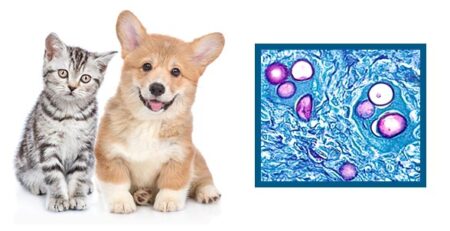
Dermatophytosis, often also called “mycosis,” is a skin infection caused by fungi that attack the fur, nails, and outer layer of the skin in dogs and cats.
It’s a fairly common problem, but it should be taken seriously because it can spread easily among animals and, in some cases, even to people.
What Causes Dermatophytosis?
The fungi that cause dermatophytosis belong to a group called dermatophytes.
Among the most common fungi in small animals is Microsporum canis, a fungus that primarily affects cats but can also cause infections in dogs.
Other fungi involved may come from the environment or the soil, such as Microsporum gypseum, or be transmitted by other animals, such as certain strains of Trichophyton.
How Does Dermatophytosis Manifest in Dogs and Cats?
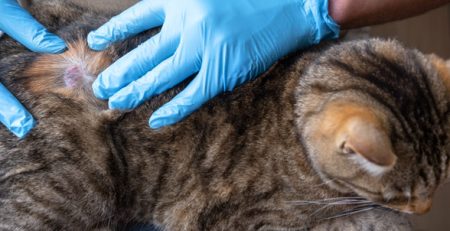
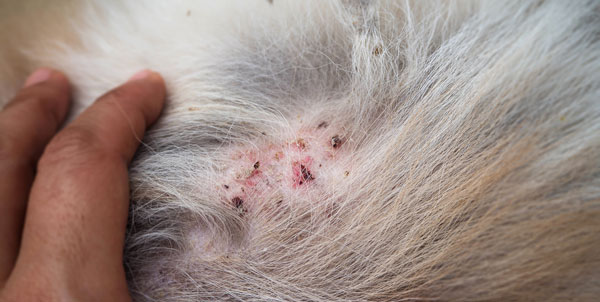
The signs are not always the same, but the most common symptom is the appearance of nodular lesions—often round, hairless patches—accompanied by dry, flaky skin.
In some cases, the lesions remain localized; in others, they spread and become more noticeable.
Itching is a common symptom and can cause the animal to scratch, leading to further skin damage and secondary lesions.
In cats, fungal infections can also present in less typical ways, such as scabs, excessive dandruff, or deeper lesions.
Pre-existing and open skin lesions caused by an eosinophilic granuloma provide an ideal entry point for fungal spores present in the environment, facilitating the onset of a localized opportunistic fungal infection
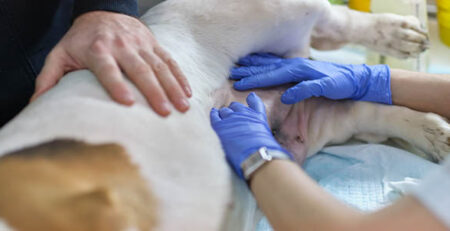
In dogs, however, inflammatory and nodular lesions may be present, which are sometimes more difficult to detect with the naked eye.
Some breeds also seem to be more prone to developing persistent or particularly extensive forms of the condition.
Risk Factors: Direct Transmission and Environmental Contamination
Dermatophytosis is transmitted primarily through direct contact with infected animals.
This can happen while playing, grooming each other, or simply by being close to one another.
In addition to direct contact, dermatophytosis can be transmitted through contaminated objects.
Fungal spores can remain active in the environment and on surfaces such as floors, carpets, and beds for long periods of time.
How to Identify Fungal Infections: Diagnostic Methods
It is important to determine whether it is actually a dermatophyte infection, because other skin conditions can cause similar symptoms.
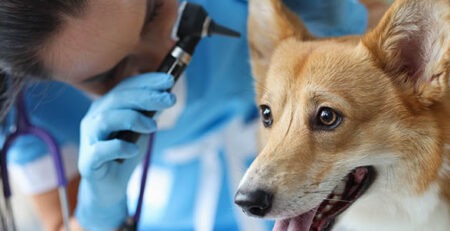
For this reason, the veterinarian may use various diagnostic methods: clinical observation, a Wood’s lamp, hair analysis, fungal culture, or, in more complex cases, a biopsy and molecular testing.
A culture remains one of the most useful tests for confirming the presence of the fungus and accurately identifying the source of the infection.
In cases of uncertainty or in severe forms, however, additional tests may be necessary.
Treatments and Therapies for Dermatophytosis in Dogs and Cats
Once the diagnosis of dermatophytosis has been confirmed, the veterinarian prescribes a targeted treatment plan, which—to be truly effective—must address the condition on multiple fronts simultaneously.
In fact, it’s not enough to treat the animal’s skin; you also need to address the environment in which it lives to prevent the fungus from continuing to spread.
The main treatment almost always combines topical therapy, which involves the use of special shampoos, lotions, or therapeutic sponging treatments containing antifungal active ingredients.
This step is essential not only for treating injuries but also for mechanically reducing the spore load on the fur, thereby lowering the risk of infection.
Why It’s Important to Take Action Early
Dermatophytosis is not just a cosmetic problem.
If it is not treated in time, it can spread to other animals in the household and, in some cases, even to people.
Taking immediate action means protecting your pet, but it also helps limit the spread of the infection within the family.
An animal with dermatophytosis must be kept isolated until it has fully recovered and should be handled with disposable gloves.
Dog beds, blankets, bowls, toys, and the home environment in general should be disinfected regularly to prevent the spread of dermatophytosis and reduce the risk of reinfection.
If you suspect that your dog or cat has ringworm, contact the veterinarians on our staff—who are always available to help—and schedule an appointment.
We would also like to remind you that Clinica La Veterinaria is always open h24 every day including holidays and with First Aid service from 8 pm to 8 am.