Table of Contents
Alopecia in Cats: All the Causes of Hair Loss in Cats
Alopecia in cats—that is, hair loss—can be partial or complete and can have a wide variety of causes: parasitic, infectious, allergic, hormonal, behavioral, or hereditary.
Types of Alopecia in Cats
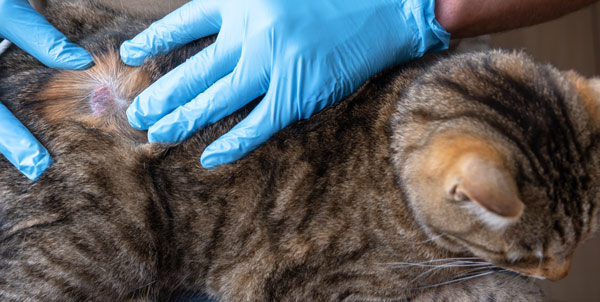
This condition may present as focal areasof hair loss, symmetrical patches, diffuse thinning, or areas of severe itching accompanied by scratching and secondary wounds.
Some cats have crusty lesions or flaky skin, while others have smooth, hairless patches with no obvious signs of inflammation.
The distribution of the affected areas (for example, on the side, on the belly, or around the head) helps the veterinarian narrow down the possible causes.
Parasitic and Infectious Causes of Feline Alopecia
Parasitic causes include fleas, mites (such as those that cause mange), and other ectoparasites that cause intense itching and subsequent hair loss due to excessive scratching or licking.
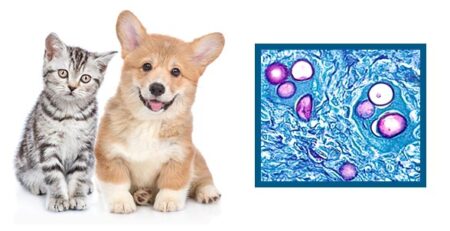
Fungal infections, particularly dermatophytosis, are a common cause of patchy hair loss, especially in young cats or those in contact with other infected animals; dermatophytosis can also be contagious to humans and other pets.
Secondary bacterial infections can complicate and worsen the clinical picture, requiring specific treatments.
Allergic and Inflammatory Causes of Alopecia in Cats
Food allergies, flea bite allergies, or contact dermatitis can cause chronic itching and subsequent hair loss.
In addition, primary skin diseases such as eosinophilic granulomas or idiopathic dermatitis may present with areas of alopecia and inflammatory lesions that require a targeted diagnostic approach.
Allergic reactions can be seasonal or persistent, and the clinical history (when hair loss begins, any changes in diet or environment) is often key to suspecting this cause.
Hormonal and systemic causes
Hormonal imbalances, such as thyroid problems or adrenal gland dysfunction, can cause diffuse or symmetrical alopecia.
This type of alopecia is often not itchy and is accompanied by other systemic signs: changes in weight, appetite, or behavior.
Cancers or other systemic diseases may sometimes first manifest as changes in the coat and hair loss.
Behavioral Causes: Self-Induced Alopecia
Excessive licking or rubbing by a cat due to behavioral factors ( stress, anxiety, boredom) can lead to self-induced alopecia, which often appears as smooth, well-defined patches, sometimes symmetrical.
Management requires both behavioral interventions (enrichment, play, changes to the routine) and, in some cases, anxiety medications prescribed by a veterinarian.
Alopecia in Cats: A Diagnostic Approach
The diagnosis always begins with a thorough medical history and a physical examination of the skin and coat.
The main tests include:
-
- Skin scraping: to identify mites and parasites.
- Wood’s lamp and culture: for detecting fungal infections (dermatophytosis).
- Blood tests: to evaluate thyroid function and hormone levels.
- Cytology or biopsy: in more complex cases.
Treatment depends on the identified cause
For parasites and infections, topical or systemic antiparasitic agents, as well as antifungals or antibiotics, are used when indicated.
In cases of dermatophytosis, antifungal shampoos, topical treatments, and systemic therapies may be necessary.
In cases of food allergies, elimination diets may be used.
If the cause is hormonal, medical treatment of the underlying condition (such as therapy for thyroid dysfunction) often improves the coat.
For psychogenic problems, environmental adjustments and, when necessary, medication to reduce anxiety are helpful.
Alopecia in Cats: Complementary Treatments and Management
For anxious cats, environmental enrichment (interactive toys, vertical play areas) reduces the risk of self-induced alopecia; encouraging the cat to play and providing stimulation can improve its well-being and reduce excessive licking.
Avoid using non-prescription topical products, and always consult your veterinarian before starting any home treatments—this is important to prevent the situation from getting worse.
Contact your trusted veterinarian as soon as you notice noticeable hair loss, scaly patches, severe itching, or changes in behavior or appetite, because early diagnosis facilitates effective treatment.
The veterinarian will develop a personalized diagnostic and treatment plan and schedule the necessary follow-up visits to assess the response to treatment.
At our clinic, you can schedule a comprehensive dermatology exam for your cat, including targeted tests and a personalized treatment plan.
To refer your cat for a checkup, contact the veterinary doctors on our staff who are always available to you.
We would also like to remind you that Clinica La Veterinaria is always open h24 every day including holidays and with First Aid service from 8 pm to 8 am.