Free animals day: a change of perspective
Free Animals Day, or strays as they are usually called, is an opportunity to review our perceptions and behaviors toward animals on the land.
Free and not stray: two terms compared
Dog and cat straying is a complex, multifactorial issue rooted in intertwining social, cultural and economic dynamics.
The contemporary debate on animal welfare has brought to light various terminologies referring to the condition of animals, particularly those living in close proximity to humans.
Two terms that are often used interchangeably but have different connotations and implications are“free” and“stray.”
The word“free” evokes a sense of autonomy and choice, indicating an animal that lives according to its natural inclinations, without human-imposed constraints.
This term suggests a condition in which the animal has access to natural resources, can express instinctive behaviors and enjoys a better state of mental and physical health.
In contrast, the word“stray” implies a situation of abandonment and vulnerability, associated with experiences of hardship and deprivation.
The negative connotation of “stray” tends to reduce the animal to a mere survival condition, rather than recognizing its ability to live freely.
Ethical responsibilities to animals
The term “stray” has always fueled a perception of problem, suggesting that animals in this condition are a burden to be managed rather than living beings with inherent rights.
Recognizing an animal as “free” implies a social and ethical responsibility toward it.
That is, that humans must work to create favorable environments where animals can live independently rather than merely implementing punitive practices against them.
A different perspective: from problem to resource
Unfortunately, free-roaming animals on the land are seen as a problem to be solved; on the contrary, they play a valuable role within communities.
The care and protection of free animals through ethical husbandry practices not only improves their lives but also enriches our communities.
It is the responsibility of all of us to take a step back and adopt a new perspective that respects the nature and freedom of free animals on the land, recognizing the importance of ethics in our relationship with them and their basic rights.
Respect for the nature of free animals
The first and fundamental action toward free animals is to respect their nature.
A serious prejudice is to conceive of these animals as compulsorily “domestic” in the traditional sense.
Exposing them to situations that do not respect this nature can result in damage to their mental and physical well-being.
Free-roaming animals, although they may seem vulnerable, have a form of autonomy that distinguishes them from domesticated animals.
This freedom allows them to explore, socialize and, in some cases, form peer communities.
Taking a paternalistic view toward them risks restricting their natural rights.
Therefore, any human intervention should aim to improve the quality of life of these animals without depriving them of their inherent freedom, thus ensuring their natural well-being and respecting their rights.
An effective and respectful approach
Land-based care is an effective and respectful approach to free-roaming animals.
This model involves associations and volunteers to feed them, provide veterinary care, and promote sterilization campaigns.
In this way, the animals can remain in their natural habitat, reducing their stress and allowing their autonomy to remain intact.
These animals often become an element of social cohesion as they incite cooperation among citizens in caring for them.
The value of free animals to the community
In many cultures, strays are considered an integral part of the urban and rural fabric.
Daily experiences of encounters with these animals can make us reflect on the values of empathy and collective responsibility.
Through caring for free animals, communities can learn the importance of solidarity and protection of living beings, promoting a message of respect and dignity, and reflecting on the morality of our actions toward all life forms.
For the joy of seeing them HAPPY
©2026 -Text: Tiziana Genovese – Veterinary Technician
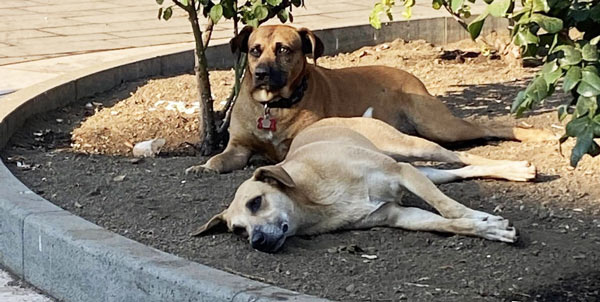
In photo: Jack and Amber, free dogs on the territory
Courtesy of:
https://www.facebook.com/profile.php?id=100083111573239
All rights reserved.