Table of Contents
Pyoderma in dogs and cats: a condition often secondary to underlying disease
Pyoderma is a bacterial skin infection that frequently affects dogs and cats.
The bacterium Staphylococcus intermedius is one of the most common pathogens associated with pyoderma in dogs.
This bacterium is normally found on the skin of animals and under certain conditions, it can become pathogenic.
Why cats and dogs get pyoderma
This inflammatory condition is often secondary to underlying diseases, such as food allergies, environmental allergies, parasitosis, or hormonal disorders.
Certain circumstances may contribute to its proliferation:
Alteration of the skin barrier: which allow the bacteria to penetrate into the deeper layers.
Immunosuppression: dogs or cats with weakened immune systems due to chronic illness, stress or drug treatments are more susceptible to infections.
Environmental conditions: moist or dirty environments can promote the proliferation of opportunistic bacteria, including staphylococci.
The triggers of pyoderma in dogs and cats
Allergies: allergic reactions to food, pollen or parasites such as fleas and ticks are among the most common causes.
Parasites: flea or mite infestations can damage the skin barrier, contributing to the development of bacterial infections.
Hormonal disorders: hormonal imbalances, such as hypothyroidism or diabetes mellitus, can predispose dogs to developing skin infections.
Trauma: Wounds or abrasions can become portals of entry for bacteria, promoting the development of pyoderma.
How to recognize pyoderma
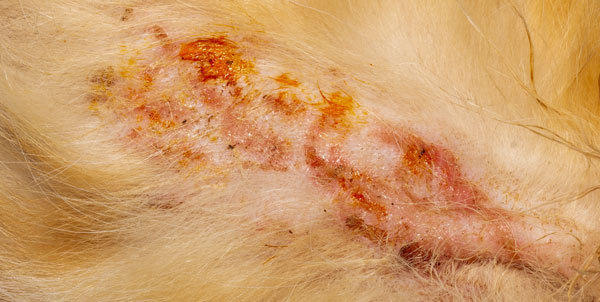
The skin areas most affected by pyoderma are the legs (interdigital spaces), elbows, chin, and belly, but all areas of the skin can be affected, depending on the severity of the infection.
Clinical signs of pyoderma can vary greatly depending on the severity of the infection.
Common symptoms include:
- Erythema: reddening of the skin, often accompanied by heat and pain
- Scabs: dry, thickened formations on the surface of the skin, which may form as a result of scratching or infection
- Itching: the dog or cat the dog may scratch and lick itself incessantly, causing further skin lesions and secondary infections
- Hair loss: localized in affected areas, often visible around scabs and pustules
- Pustules: small pus-filled bubbles that can rupture and cause further irritation
Dog pustules: what to do
The presence of pustules requires special attention.
Attempting to squeeze or remove the pustules could aggravate the infection and cause further complications therefore, absolutely avoid.
Only the Veterinarian can examine the lesions and recommend appropriate treatment.
Itching and skin infection dog and cat
Itching is one of the most common symptoms associated with pyoderma in dogs and can range from mild to intense.
This can be caused by inflammation of the skin and the presence of bacteria.
If left untreated, itching can lead to secondary skin lesions, such as scratching and more serious infections.
Clinical diagnosis of pyoderma
Clinical diagnosis of pyoderma in dogs is critical for effective treatment and begins with a thorough physical examination by the veterinarian.
Conditions to consider include fungal infections, parasitoses, and allergies, especially food allergies.
The veterinarian may perform additional tests, such as blood tests or skin biopsies, to obtain an accurate diagnosis
It is also important to provide the Veterinarian with detailed information about the dog or cat’s medical history, including any recent symptoms and changes in behavior.
How to treat pyoderma in dogs and cats
Treatment for canine pyoderma requires a multidisciplinary approach.
The veterinarian may prescribe topical or systemic antibiotics depending on the severity of the infection.
Antibacterial shampoos can help clean the skin and reduce inflammation.
Using them regularly increases the effectiveness of the treatment.
Relapses of pyoderma are common, especially if the underlying causes are not addressed.
It is important to monitor the dog for signs of flare-ups and follow the Veterinarian’s instructions to prevent new infections, including allergy management and regular skin cleansing.
Dog and cat pyoderma is not contagious to humans
It is important to clarify that canine pyoderma is not contagious to humans.
However, it is always advisable to maintain good hygiene and wash hands after handling a skin-infected animal, as some pathogens can potentially be transmitted to people with compromised immune systems.
If you notice any signs of pyoderma in your dog or cat, contact the veterinary doctors on our staff who are always available for evaluation.
We would also like to remind you that Clinica La Veterinaria is always open h24 every day including holidays and with First Aid service from 8 pm to 8 am.