Cymric Cat: The Long-Haired Variant of the Manx
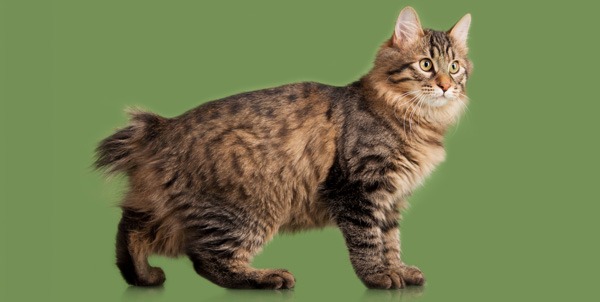
The Cymric cat is widely recognized as the long-haired variety of the Manx cat, the well-known feline breed native to the Isle of Man and famous for its lack of a tail.
The total or partial absence of this appendage has captured the public’s imagination for centuries, giving rise to intriguing myths and legends about this tailless cat.
Folk Tales in Cymric
Some legends from the Isle of Man tell of ancient Celtic or Viking raiders.
These warriors regarded cats’ tails as powerful good-luck charms and used to cut them off to decorate their battle helmets.
To put an end to this barbarity and protect her offspring, it is said that a founding mother cat began biting off the tails of her newborn kittens with her teeth.
That way, the puppies would never again be captured by the soldiers.
Although mythology offers poetic answers, the scientific reality is quite different.
The Genetics of the Cymric
Both the Manx and the Cymric share the exact same biological origin: a spontaneous genetic mutation that occurred centuries ago on the Isle of Man.
The gene for long hair was already naturally present in the island’s cat population, likely introduced by cats that arrived by sea.
The long-haired kittens that were occasionally born in Manx litters (as a recessive trait) were initially discarded.
In the 1960s, in Canada, the breeders Blair Wright and Leslie Falteisek decided to intentionally select these specimens.
Their goal was to establish the long-haired trait by transforming the existing natural genetic mutation into a formally recognized cat breed.
Physical Characteristics and Tail Subtypes
The Cymric is a medium-to-large cat, muscular and with a distinctly rounded build.
Adult males weigh between 0.5 and 6.5 kg, while females weigh between 3.5 and 5 kg.
The tail is divided into four main subtypes:
- Rumpies: Tail completely absent (only a small indentation is present).
- Rumpy-riser: indicated by a small bony protrusion.
- Stumpy: a partial tail, consisting of a few deformed vertebrae.
- Longy (or Tailed): a tail of nearly normal length, essential for breeding programs.
The Cymric’s silhouette is described as “cradle-shaped”: the line of its back rises gradually from the shoulders to the hindquarters, precisely because its hind legs are noticeably longer and stronger than its front legs.
This body structure gives it a characteristic “rabbit-like” gait and allows it to reach remarkable heights with extreme ease.
Cymric Cat Coat Care
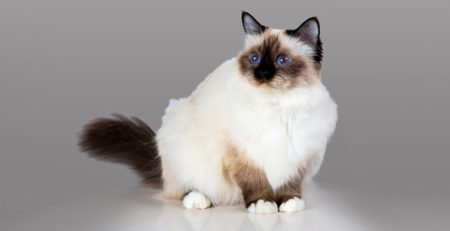
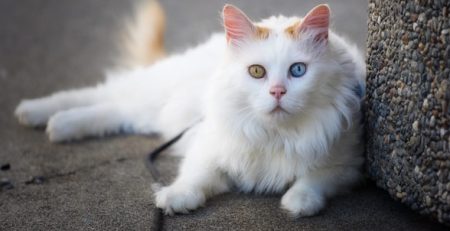
The coat is medium-length, silky, very dense, and has a thick undercoat.
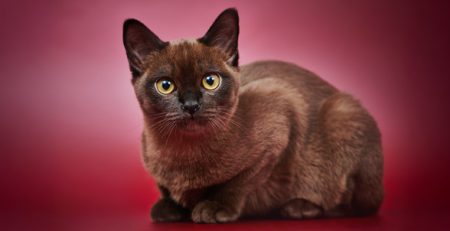
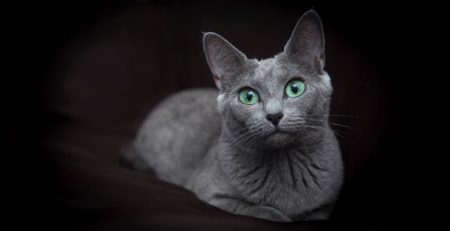
This breed boasts an extraordinary variety of colors, ranging from solid to spotted, making each individual unique.
- Regular brushing: Two or three times a week is enough to remove dead hair.
- Shedding seasons: In the spring and fall, the Cymric sheds a massive amount of undercoat. During these times, it requires daily brushing to prevent knots and tangles from forming.
The Cymric’s Temperament and Behavior
The Cymric is an exceptionally calm, affectionate cat that thrives in a family setting:
- He forms a deep bond with his humans and loves to follow them from room to room.
- He’s always active and curious: he loves fetch games and problem-solving
- It gets along peacefully with other pets and is very patient with children.
- His strong need for social interaction can lead to separation anxiety if he is left alone for too long.
Before welcoming a Cymric into your family, it’s essential to ask yourself if you can give it the time and attention it needs.
Health Issues and Genetic Risks in the Cymric
Unfortunately, the Cymric’s most famous characteristic is also its greatest biological risk factor.
The tailless gene can cause what is known as “Manx syndrome,” which involves:
Severe spinal defects and neurological damage.
Spinal malformations that can impair bladder and bowel control.
The Cymric cat’s diet should support its powerful musculature, but obesity and being overweight must be avoided at all costs.
Excess weight would pose a serious risk to the joints and spine, which are already genetically fragile.
Signs of illness to watch for
Signs of common diseases or neurological complications in the Cymric include:
– Difficulty or stiffness in moving the hind legs.
– Lethargy and sudden intolerance to physical activity.
– Unexplained weight loss or drastic changes in appetite.
It is important to closely monitor your cat’s behavior and contact a veterinarian immediately if you notice any of these abnormalities.
To bring your Cymric cat in for a follow-up visit, vaccinations, or periodic checkups, please contact the veterinarians on our staff, who are always here to help.
We would also like to remind you that Clinica La Veterinaria is always open h24 every day including holidays and with First Aid service from 8 pm to 8 am.