Mongolian gerbil: the curious rodent that loves to smell everything
The gerbil(Meriones unguiculatus) is a small rodent native to the steppes of Mongolia.
A few dozen gerbil specimens were first captured in Mongolia and taken to Paris in 1935 where they were awaited by Dr. Victor Schwentker, who had earmarked them for research.
Docile and prone to contact, gerbils became popular as pets and are extremely common today.
The physical characteristics of the gerbil
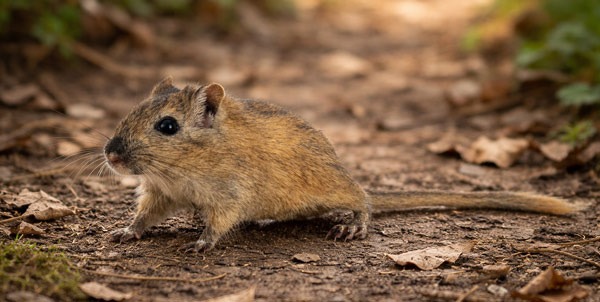
Mongolian gerbils are small rodents, with an average length ranging from 10 to 12 centimeters, excluding the tail, which can reach a similar length.
La coda performs an important balancing function during jumps and runs.
They have a soft, thick coat that can vary in color from light gray to brown.
Their ears are round and their eyes, large and dark, give them a lively and curious appearance.
Strong, muscular hind legs allow these rodents to be skilled diggers and runners, an essential prerogative in their natural habitat.
The feeding of the Mongolian gerbil
In the wild, the gerbil feeds mainly on seeds, roots, leaves and other plants.
An appropriate diet should include a mixture of sunflower seeds, millet, oats and fibrous substances such as hay, which promote intestinal health and chewing.
In fact, like all rodents, the gerbil has long, continuously growing incisor teeth, which it keeps constant in length with use.
Foods high in fat or sugar should be avoided, as they can lead to significant health problems, including obesity and metabolic diseases.
In addition, it is important to always provide fresh, clean water, as proper hydration is essential for the gerbil’s well-being.
The ideal environment for gerbils
However, gerbils remain wild animals with very specific ethological needs that are difficult to replicate in the home.
These rodents are naturally accustomed to living in dry, sunny soils between 20 and 26 degrees Celsius and suffer in temperatures above 35 degrees Celsius.
The ideal habitat should replicate the conditions of its natural environment.
The characteristics of the gerbillarium
The gerbil spends a lot of time digging, tunneling and exploring its environment, using its sense of smell to “smell” everything.
The gerbillarium, made of glass or plexiglass, must be deep enough for him to dig, and environmental enrichment is necessary to stimulate his physical activity.
It is very important not to use the open type hamster wheels with bars because the gerbil’s tail can get trapped and fracture or amputate.
Be aware that the tail, by a defense mechanism, comes off very easily; therefore, it is important never to grab it by the tail, but to pick it up gently in your hands.
In addition, hiding places and shelters, such as cardboard tubes or small wooden houses, allow gerbils to retreat and feel safe when resting.
The gerbil alternates between periods of rest and activity throughout the day.
It tends to be most active at dusk, when it engages in exploring its habitat and digging.
This behavior is typical of nocturnal rodents, which feel safer in the dark.
Mongolian gerbils are social animals
The gerbil tends to form strong bonds with its mates, and kept alone, it would suffer.
It is advisable to keep them in pairs or groups, as solitude can lead to stress and behavioral problems.
An interesting anecdote is that gerbils can recognize their mates by showing signs of joy when they reunite after a period of separation.
However, it is important to pay attention to partner assignment, as some social dynamics can cause conflict.
It is preferable to introduce young gerbils or siblings, rather than adult individuals of opposite sexes from different backgrounds, to reduce the risk of aggression or tension in the group.
The reproduction of gerbils
The gerbil reaches sexual maturity around 10-12 weeks of age.
Mating season usually occurs in spring and summer when environmental conditions are favorable.
Gestation lasts about 24-26 days, at the end of which the female gives birth to a litter that can range from 3 to 7 pups.
It is important to provide a calm and safe environment during this period, as females can be very sensitive to stress.
Signs of disease in gerbils
Common diseases include respiratory infections, which can manifest as sneezing and difficulty breathing, and dental problems, such as malocclusion, which can cause pain and difficulty eating.
These small rodents are generally hardy but if you notice:
- Changes in appetite
- Lethargy or inactivity
- Weight loss or hair loss
- Respiratory difficulties
- Unusual behaviors
Immediately consult your trusted veterinarian specializing in exotic animals.
To refer your Mongolian gerbil for a checkup, for advice on feeding or on its management, contact us to schedule an appointment with a veterinarian experienced in unconventional animals who works with our facility.
We would also like to remind you that Clinica La Veterinaria is always open h24 every day including holidays and with First Aid service from 8 pm to 8 am.