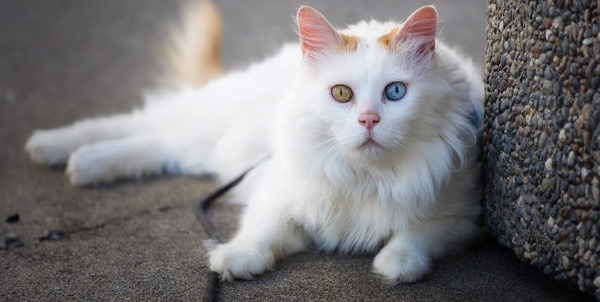
Turkish Van: the white cat symbol of purity and protection
The Turkish Van or Turkish Van cat is a feline breed native to the Lake Van area of Turkey.
Its origins go back to ancient times, when these creatures were considered sacred and bringers of good fortune.
Cats of this type are believed to have accompanied the ancient civilizations that inhabited the area, helping to control rodents and becoming an integral part of human communities.
Over the centuries, the Turkish Van has attracted the attention of travelers and naturalists, but it was not until the 1950s that the breed began to be officially recognized outside Turkey.
The first specimens were imported to Europe after a series of studies conducted by a group of scientists and amateurs.
Today, the Turkish Van is valued not only for its physical appearance but also for its behavioral peculiarities.
The recognition of race
The Turkish Van breed was officially recognized in 1982 by the Federation Internationale Féline(FIFe) and subsequently by other international feline associations.
Such recognition has been crucial to preserving its distinctive characteristics.
It has a robust and muscular body with a strong bone structure.
Adult specimens can weigh between 4 and 8 kg.
The head is triangular in shape, with large, pointed ears.
Van Turk’s eyes are often different colors (heterochromia) and can range from blue to amber.
The coat is characterized by a semi-long, silky coat, usually white with colored spots on the head and tail, which may vary in shades of red or cream.
The hair requires regular care to maintain its beauty and shine.
This coloring not only makes it easily recognizable, but it is also a symbol of purity and protection in Turkish culture where it is featured in evocative legends.
Legends about the Turkish cat Van
One of the most widespread legends is that these cats were considered messengers of the Goddess of Fertility, from whom it was possible to receive visions and prophetic dreams.
Vans were said to have a special bond with water; it was believed that they could swim and had a predilection for aquatic environments, a unique characteristic among felines.
Another legend features the white color of their fur, which symbolizes purity and spiritual protection.
In Turkish culture, white cats were seen as guardians of homes, able to protect against negativity and evil influences.
The differences between Turkish Van and Angora
The main characteristic of this breed is its coloration, which makes it distinguishable fromAngora, which, on the other hand, displays a wider range of colors and patterns.
And again, the Angora cat is generally more jointed and has a more elegant body than the sturdy Turkish Van.
In terms of character, the Van is known for its more active and curious nature, while the Angora tends to be more reserved and affectionate.
The character of the Turkish Van
The Turkish Van cat is known for its lively and sociable nature.
They are very active and playful cats who love to interact with humans and other animals.
In addition, their love of water makes them unique among cats, as Turk Van can often be observed playing with water or even swimming.
Pathologies to pay attention to
Like many feline breeds, the Turkish Van cat is prone to several diseases, some of which may be hereditary.
Common diseases include kidney disorders, such as polycystic kidney disease (PKD), and eye disorders, including vision problems related to genetics.
Other common conditions include dental and dermatological problems, so it is important to pay attention to your cat’s overall health and see a veterinarian for regular checkups.
A balanced diet and adequate physical activity are essential to prevent the onset of disease.
To have your Turco Van cat checked, for vaccines and periodic check-ups, contact the veterinary doctors on our staff who are always available to you.
We would also like to remind you that Clinica La Veterinaria is always open h24 every day including holidays and with First Aid service from 8 pm to 8 am.
For the joy of seeing them HAPPY
©2025 -Text: Tiziana Genovese – Veterinary Technician