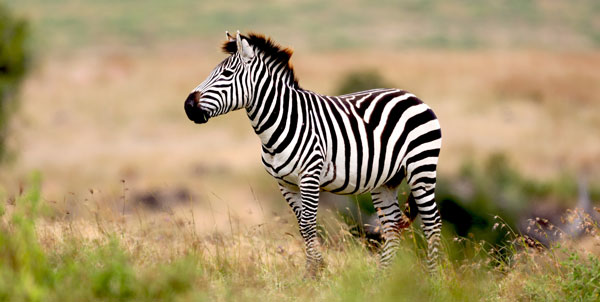
The zebra, with its black and white stripes, is the emblem of African wildlife
The origins of Zebra Day date back to the 1980s, when biologists and ecologists began to pay more attention to declining zebra populations in several areas of Africa.
The causes of this decline were many: from habitat loss due to agricultural expansion, to illegal hunting, to the impact of climate change.
How many breeds of zebras are there
Zebras belong to the Equidae family and are closely related to horses and donkeys.
They present a robust body, a prominent head, and a long, thick tail.
Zebras are divided into three main species, each with unique characteristics:
- the lowland zebra (Equus quagga), the most common, lives in savannas and grasslands (Tanzania, South Africa and Botswana)
- then Grevy’s zebra(Equus grevyi) is the largest and is found mainly in arid areas of East Africa (Kenya and Ethiopia)
- Finally, the mountain zebra(Equus zebra) is adapted to live in hilly and mountainous territories (South Africa and Namibia).
The geographical distribution of zebras is influenced by climatic conditions and food availability.
What zebras eat
Zebras are herbivores and their diet consists mainly of grass, leaves, stems and bark.
They are ruminant animals and therefore, spend much of their time grazing and chewing their food.
Their mandibles are adapted for tearing up tough savanna plants, allowing efficient digestion of nutrients.
The ecological role of zebras and interaction with other animals
Due to their herbivorous diet, they contribute to the maintenance of vegetation in savannas and grasslands by facilitating the recycling of nutrients in the soil.
In addition, their grazing stimulates the growth of new grasses, creating favorable habitats for other animal species with which they interact peacefully.
In fact, their herds often mingle with other herbivores, such as wildebeest and antelope, creating a collective defense system against predators.
Zebra predators
Zebras have several natural predators, including lions, leopards and crocodiles.
Young foals and sick or injured specimens are particularly vulnerable.
However, they also defend themselves effectively: when they feel threatened, they can form a defensive circle around the foals and use their stripes to confuse predators.
This is why zebras have black and white stripes
Each zebra has a unique “pattern” of stripes, similar to the human fingerprint, which allows each individual to be identified.
Stripes are not just an aesthetic feature, but serve several ecological and social functions.
They serve as a method of camouflage, confusing predators and making it more difficult for them to focus on a single individual within a group.
In addition, the stripes may play a role in thermoregulation, as temperature variations between the black and white stripes can affect airflow and body warming.
Finally, stripes are also an important social signal, used to communicate and recognize individuals within the herd.
Zebra stripes in folklore
Legend has it that zebras were originally white and beautiful.
One day, chased by men, a white zebra came across a pool of black liquid.
Hoping to become ugly to escape her pursuers, she stained herself with the liquid that spread over her body in irregular stripes.
The men, no longer recognizing her, let her go, and the other zebras, imitating her behavior, chose to color themselves to escape human greed.
The risk of extinction and forms of protection to preserve zebras
Habitat loss due to urbanization, agriculture and climate change has significantly reduced the areas available for zebra survival.
Illegal hunting and poaching are additional threats that endanger the zebra population, especially for the Grevy’s zebra, which is classified as “endangered” according to the International Union for Conservation of Nature (IUCN).
Several conservation projects have been put in place to protect zebras and their habitats.
Nature reserves and national parks play a crucial role in providing protected environments where zebras can live without the direct threat of humans.
In some African countries, initiatives have been launched to enable ecotourism, helping to support the local economy and raise awareness of the need to protect these creatures.
In addition, captive breeding programs aim to repopulate endangered species and ensure genetic diversity.
Educating local communities about the importance of zebra conservation is critical, as engaging populations can have a significant impact in the fight against poaching and habitat destruction.
Wild animals should be allowed to live in their natural habitat, while human interference should be limited to cases of real need and necessity of the animals themselves.
And speaking of need, to have your dog, cat or unconventional pet checked and for periodic check-ups, contact the veterinary doctors on our staff who are always available to you.
We would also like to remind you that Clinica La Veterinaria is always open h24 every day including holidays and with First Aid service from 8 pm to 8 am.