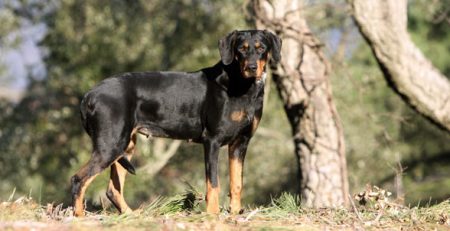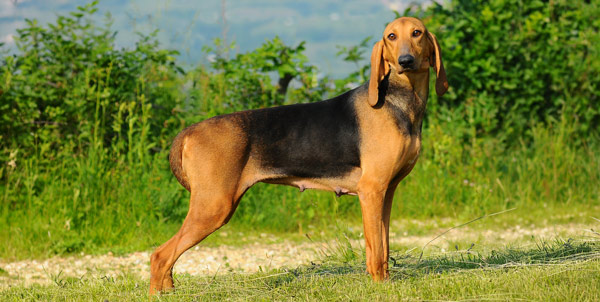
Italian Short-Haired Hound: An innate aptitude for hunting that makes it ill-suited for apartment living
The Italian Short-haired Hound is one of the oldest Italian dog breeds and is believed to be descended from hunting dogs that were already present in the Mediterranean basin in ancient times.
Some theories suggest that the ancestors of this breed originated in Ancient Egypt and were introduced to Europe by Phoenician merchants, gradually spreading along the coasts and into the interior.
A dog with an extraordinary sense of smell
Over the centuries, these dogs were prized above all for their extraordinary sense of smell and their stamina during hunts.
In ancient Rome, they were known as “sagaces,” a term that referred to animals with a keen sense of smell and a talent for tracking game.
In the Middle Ages, hounds were used primarily by the nobility in hunting parties, but over time they became increasingly common among peasants and local hunters as well.
The Morphology of the Italian Hound
Certain physical characteristics make the Italian Hound a truly distinctive dog.
Medium-sized, light, and fast, it is characterized by a sturdy build with lean, well-developed muscles, which allow it to move with great agility.
The head is elongated and rather narrow, and the muzzle is tapered.
The ears are long, slender, and drooping, set low on the sides of the head.
The recognition of race
The Italian Hound was among the first national breeds to be registered in the archives of the Italian Kennel Club.
For many years, the various varieties of the Italian Hound were considered part of a single breed standard.
However, in 1989, the ENCI decided to formally distinguish between two main varieties based on coat type: the Italian Short-haired Hound and the Italian Wire-haired Hound.
The short-haired variety has a short, smooth, dense coat that lies very close to the body.
The Wire-haired Hound, on the other hand, has a coarser, more durable coat that is up to about five centimeters long.
The coat is coarse to the touch and may form a light beard around the muzzle.
The Temperament of the Italian Hound
In terms of temperament, the hound is a well-balanced dog with its humans but is also sociable with other dogs.
He has a lively and exuberant personality, but he can also be patient and thoughtful—and above all, he is extremely sensitive.
Although it was bred primarily as a hunting dog, it can also “adapt” to life as a family pet, but it finds its greatest joy in exercising its innate instinct: nose to the ground and off it goes, in pursuit of prey.
Deciding to welcome an Italian Hound into your home means responsibly coming to terms with its temperament and motivations.
And above all, to be able to ensure that he gets the movement and physical activity he needs, because a sedentary, couch-potato lifestyle just isn’t for him.
Pathologies to pay attention to
In general, the Italian Hound is considered a fairly sturdy and hardy breed.
Despite this, it may be prone to certain hereditary disorders.
Among the most common are hip dysplasia and elbow dysplasia, conditions that affect the joints and can cause pain and difficulty moving.
Another issue that can arise during growth is hyperextension syndrome of the carpus, a musculoskeletal condition that affects puppies in the first few weeks of life and can cause temporary lameness.
The long, drooping ears, typical of the breed, can also contribute to the development of ear infections or ear infections if they are not kept clean and checked regularly.
It is important to pay attention to your diet and physical activity after meals.
Since it is prone to gastric torsion, the recommendation is to spread out the food over several meals and wait a certain amount of time before exercising.
To bring your Italian Hound in for a follow-up visit, periodic checkups, or specialist consultations, please contact the veterinarians on our staff, who are always available to assist you.
We would also like to remind you that Clinica La Veterinaria is always open h24 every day including holidays and with First Aid service from 8 pm to 8 am.