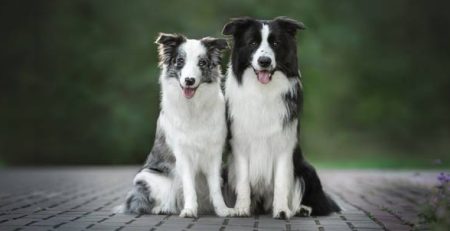
The Scottish Shepherd: A Fundamental Role in Scotland’s Agricultural History
The Scottish Shepherd Dog, often known as the Collie, originates from the Scottish Highlands, where it herded and protected flocks.
Dogs were also used as farm guard dogs, helping to maintain order and protect livestock from predators.
The term “Collie” likely derives from the ancient word “col,” which means black, referring to the color of Scottish sheep with dark coats and, consequently, denoting the dogs used to herd and care for them.
The Collie’s Breed Recognition and Standards
For a long time, it was not a single, well-defined breed, but rather a group of herding dogs with similar characteristics.
Following the breed’s official recognition by the English Kennel Club in 1895, two standards for the Scottish Shepherd were established:
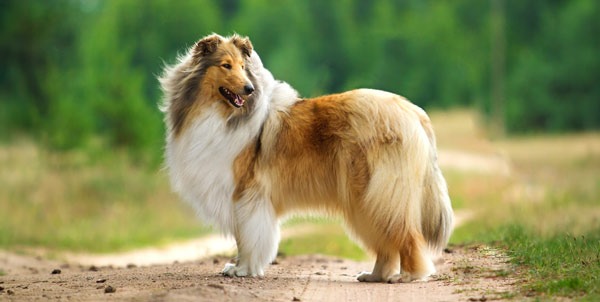
- Long-haired (Rough Collie): It has a long, smooth, and dense coat, which gives it an elegant and distinguished appearance, highlighted by the thick ruff around its neck.
- Short-haired (Smooth Collie): This variety has short hair that lies close to the body.
Both varieties have an elongated, tapered head, expressive oval-shaped eyes, semi-erect ears with tips that curve slightly forward, and a slender yet muscular body.
Grooming a Collie’s Coat
In Rough Collies, the long coat requires regular and thorough brushing to prevent matting, maintain the softness of the coat, and ensure healthy skin.
It is recommended to groom your dog at least once or twice a week, paying special attention to areas prone to matting, such as behind the ears, under the armpits, and along the neck.
Although the Smooth Collie has a shorter, easier-to-maintain coat, it still requires periodic grooming to remove dead hair.
Despite their physical differences, both varieties share the same qualities: balance, sensitivity, and a strong attachment to family.
The Scottish Shepherd is known for its extremely even temperament
It is an affectionate and loyal dog, protective but not aggressive, and patient with children.
However, it retains a certain initial wariness toward strangers—a trait typical of herding dogs, which are accustomed to watching over the flock.
He retains this innate instinct to cooperate and his need for regular physical activity, mental stimulation, and close interaction with his human.
It is therefore not suited to a sedentary or isolated lifestyle, as the Scottish Shepherd needs to be actively engaged.
Therefore, this dog is not suited to a sedentary or isolated lifestyle.
Genetic disorders typical of the breed
From a health perspective, the Scottish Shepherd may be prone to breed-specific genetic conditions that require close monitoring and regular veterinary checkups.
The MDR1 (Multi-Drug Resistance) gene mutation is the most serious genetic condition affecting the Scottish Shepherd.
This mutation disrupts the blood-brain barrier, preventing the proper filtration of commonly used drugs, which then accumulate in the nervous system, causing severe or fatal neurotoxic effects:
- Symptoms of toxicity: excessive salivation, unsteadiness (ataxia), blindness, difficulty breathing, and coma.
- Prohibited/Dangerous Drugs: Ivermectin (a common antiparasitic drug), as well as certain anesthetics, sedatives, and chemotherapy drugs
Among the main health issues are also hereditary eye disorders, and CEA (Collie Eye Anomaly) is the breed’s most common congenital eye condition.
It consists of an abnormal development of the inner vascular layers of the eye and, in the most severe cases, may be associated with retinal detachment, leading to partial or total blindness in dogs.
Both MDR1 and CEA can be detected early through a simple genetic DNA test (which can be performed using a saliva swab).
This test determines whether the dog is Healthy (Clear), a Healthy Carrier (Carrier), or Affected (Affected), allowing the veterinarian to tailor the medication treatment plan with complete confidence.
Other common genetic disorders in Scottish Shepherds include hip dysplasia and heart conditions such as dilated cardiomyopathy.
To bring your Collie in for a follow-up visit, vaccinations, or routine checkups, please contact the veterinarians on our staff, who are always available to assist you.
We would also like to remind you that Clinica La Veterinaria is always open h24 every day including holidays and with First Aid service from 8 pm to 8 am.