The jaguar: the loss of its habitats is a threat to its survival
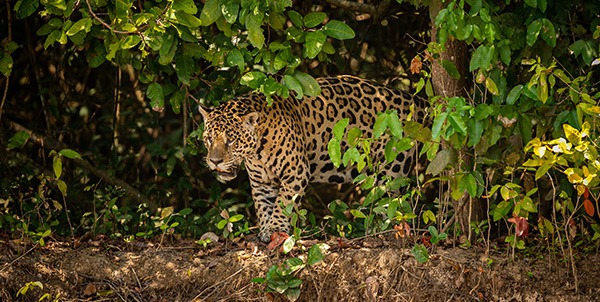
The jaguar (Panthera onca) is one of the world’s most charismatic felines, a symbol of strength and beauty.
A typical animal of tropical forests, the jaguar can adapt to a variety of environments, including savannas and swamps.
Its geographic distribution extends from the southern United States to Argentina, with a significant concentration in the Amazon region.
Curiosities and characteristics of the jaguar
The jaguar is the third largest feline in the world, after the tiger and the lion.
Characterized by a massive, muscular body, it has a coat of golden fur with black rosette-shaped patches that enable it to blend effectively into the dense vegetation of its forests.
It has a powerful grip, enabling it to pierce the carapace of turtles and catch large prey.
It is an excellent swimmer, capable of hunting fish and crustaceans in local waterways.
Its role as an apex predator is crucial in maintaining the balance of ecosystems by regulating populations of other species and promoting biodiversity.
However, these ecosystems are threatened by deforestation and mining, which drastically reduce the living space of this feline and other species that inhabit these areas.
The threats facing the jaguar
Deforestation is a major risk factor for its survival.
Agricultural development projects andurban sprawl have led to the destruction of vast areas of natural habitat.
This loss of territory not only limits the availability of prey, but also forces jaguars to move to more urbanized areas, increasing conflicts with humans.
In addition, poaching remains a significant threat.
Jaguars are killed for their valuable coats and because of the perception that they pose a threat to livestock.
This combination of factors has led to a drastic decrease in the jaguar population in recent decades.
It is estimated that there are currently between 15,000 and 20,000 jaguars left in the wild, with a declining population in many areas.
The jaguar situation is critical and varies greatly from region to region
According to theInternational Union for Conservation of Nature(IUCN), the jaguar is classified as “near threatened” on the Red List of Species at Risk.
This status suggests that the species is not immediately at risk of extinction, but that current trends indicate a potential decline in the population if sufficient conservation measures are not implemented.
Strategies for saving jaguars
To counter the declining jaguar population, it is crucial to implement effective conservation strategies.
Among these, the creation and strengthening of protected areas is a crucial step.
Well-managed conservation areas can provide a safe haven and an adequate source of prey.
Ecological corridors, which connect different habitats, are equally vital for jaguars to move in search of food and breeding partners.
In addition, educational programs targeting local communities can help raise awareness of jaguar conservation and its vital role in maintaining the ecosystem.
It is essential to encourage sustainable agricultural practices that minimize the impact on jaguar habitat, as well as promote economic alternatives to reduce the need for poaching.
International collaboration
Because the jaguar is found in several countries, efforts for its conservation must coordinate across borders.
Shared research projects and collaborative conservation programs may offer more effective results in ensuring the jaguar’s survival and the protection of its diverse remaining populations.
Only increasing awareness can save the jaguar and preserve the habitats that support it.
Protecting this species is not only a moral duty, but also represents an investment in the health and biodiversity of our planet.
Obviously, jaguars are not pets and we can all limit ourselves to observing them in their habitat, but for your dog or cat, our staff is always at your disposal.
We also remind you that Clinica La Veterinaria is always open h24 including holidays and with First Aid service from 8 am to 8 pm.
For the joy of seeing them HAPPY
©2025 -Text: Tiziana Genovese – Veterinary Technician