Table of Contents
Pogona vitticeps: Personality, Diet, and Care of the Bearded Dragon
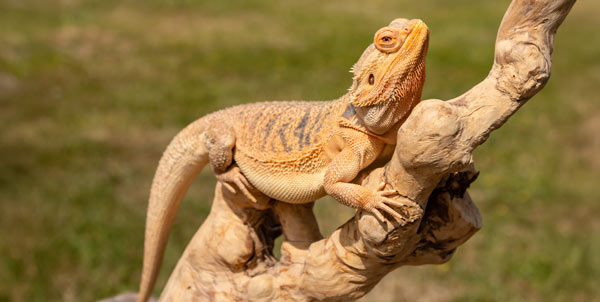
Pogona is a genus of lizards native toAustralia, commonly known as “bearded dragons” because of the distinctive beard of spines under their throats.
There are several recognized species, but Pogona vitticeps is the most common.
It stands out for its distinctive appearance, with several highly recognizable anatomical features.
- Sturdy, flattened body
- Triangular head
- A long tail that can account for more than half of the total length
- Strong limbs with clawed fingers adapted for climbing
- Its coloration ranges from beige to brown, with patterns that aid in camouflage in arid environments.
- Spiny scales along the sides and on the head
The famous “beard” of the Pogona vitticeps
A very distinctive trait—namely, the ability to puff up and darken their beards—is what has made Pogones some of the best-known reptiles.
The “beard” consists of an area of the throat covered with spiny scales.
When the animal is excited, threatened, or engaging in territorial or reproductive behaviors:
– Causes swelling in the throat due to the expansion of the hyoid apparatus
– The thorns become more noticeable
– The color may darken to a deep black
This beard serves several purposes:
- Defense: It makes the animal appear larger and more threatening
- Territorial communication: signals dominance to other individuals
- Courtship: It is displayed during reproductive interactions
- Stress response: It can also occur in situations of fear or distress
What is the temperament of Pogona vitticeps?
Pogona vitticeps is known for its calm and sociable nature.
Unlike many other reptiles, it tends to get used to human presence quite easily.
If handled properly from a young age, it will generally allow itself to be picked up without displaying aggressive behavior.
It is a curious animal, active during the day, and it often observes what is happening around it.
How to Take Care of a Bearded Dragon at Home
Before adopting one, it’s important to understand its needs and the care required to ensure it leads a healthy and happy life.
To properly care for a Pogona, it is essential to set up a terrarium that is appropriate for its size.
An adult Pogona vitticeps generally reaches a length of between 45 and 60 centimeters, including the tail.
Males tend to be slightly larger and sturdier than females.
Growth is particularly rapid during the first 12 to 18 months of life and depends on several factors, including genetics, nutrition, and appropriate environmental conditions.
An adult specimen needs a spacious, well-ventilated enclosure furnished with rocks, branches, and hiding places that allow the animal to climb and rest.
Regular cleaning of the terrarium is essential to prevent the spread of bacteria and parasites.
It is also important to avoid handling the animal too much during the first few days after it arrives home, so that it can settle in without stress.
Pogonas are diurnal animals and require a proper light-dark cycle; UVB lamps are essential for calcium metabolism and bone health.
What is the ideal temperature for a Pogona vitticeps?
Temperature is one of the most important factors in caring for this reptile.
As a cold-blooded animal, the Pogona regulates its body temperature through its surroundings.
There must be a temperature gradient in the terrarium:
- Hot zone: between 38 and 42 °C.
- Intermediate range: between 30 and 35 °C.
- Cool area: between 24 and 28 °C.
- Nighttime temperature: between 18 and 22 °C.
The presence of a heat lamp and a reliable thermometer allows you to constantly monitor environmental conditions.
Inappropriate temperatures can impair digestion, activity, and the immune system.
What does Pogona vitticeps eat?
The diet varies depending on the animal’s age.
Young Pogone lizards require a higher amount of protein and feed primarily on insects such as crickets, farmed cockroaches, locusts, and mealworms (in moderation).
As children grow, the proportion of plant-based foods in their diet increases.
Adult specimens should primarily consume chicory, radicchio, dandelion, arugula, and escarole.
Insects still make up an important part of their diet, though in smaller quantities than they do for juveniles.
Fruit should make up only a small percentage of abearded dragon’s diet (about 10–15% of its total plant intake).
What Kind of Fruit for a Pogona?
Since fruit is very high in sugar, it should be given only occasionally—about 1–2 times a week—to avoid problems with obesity or loose stools.
Always cut fruit into very small pieces to make it easier to chew and digest.
Also, be sure to remove any pits, seeds, or peels that could cause intestinal blockages or be toxic.
It is also essential to supplement with calcium and vitamins as directed by your veterinarian.
How to Tell If a Bearded Dragon Is Sick
A healthy pogona is alert, active, and has a good appetite.
On the other hand, some signs may indicate the presence of health problems:
- Prolonged loss of appetite
- Noticeable weight loss
- Lethargy and reduced activity
- Respiratory difficulties
- Abnormal Swelling
- Abnormal stools or persistent diarrhea
- Sunken eyes or eyes that are frequently closed
- Tremors or movement problems
If one or more of these symptoms are present, it is advisable to consult a veterinarian specializing in exotic animals as soon as possible, since many reptile diseases can worsen rapidly if left untreated.
To bring your pogona in for a checkup, contact us and schedule an appointment with the veterinarians who specialize in exotic animals and work with our facility.
We would also like to remind you that Clinica La Veterinaria is always open h24 every day including holidays and with First Aid service from 8 pm to 8 am.