Guinea Pig: The Rodent That Purrs Like a Cat
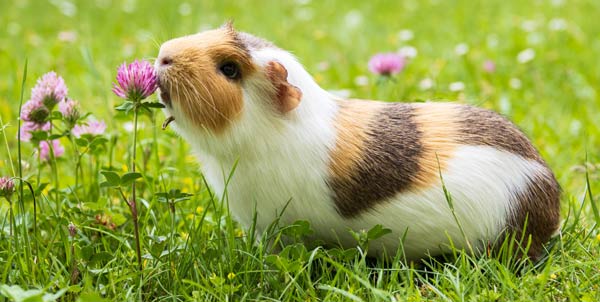
The guinea pig, scientifically known as Cavia porcellus, does not originate from India but rather from the Andean regions of countries such as Peru, Bolivia, and Ecuador.
It was introduced to Europe in the 16th century by the Spanish conquistadors and quickly became a much-loved pet.
There are many different breeds of guinea pigs, which are distinguished primarily by their coat type:
- Short coat: like the American
- Long-haired: such as the Peruvian or the Sheltie
- Curly coat: such as the Rex or the Teddy, with a soft, wavy coat
- Hairless: like the Skinny, but more delicate and sensitive to temperature
Where and How to Keep Guinea Pigs at Home
To keep it as a pet, it is essential to provide a suitable environment, since confined spaces can cause stress.
The cage should be at least 100×80 cm for a single bird, but the larger it is, the better; choose one with a smooth bottom rather than a metal grid to prevent injuries to its feet.
Cover the bottom with absorbent material, such as specialized litter or dust-free wood shavings, and replace it at least twice a week to completely remove feces and urine.
The ideal temperature for a guinea pig ranges from 18 to 24 degrees Celsius.
It is essential to avoid sudden temperature changes and drafts, as these animals are very sensitive to extreme temperatures.
So, make sure the area where your pet lives and where you place the cage is well-ventilated but draft-free.
In the wild, guinea pigs live in grassy, open areas, often in groups.
They prefer areas with abundant vegetation, which provides both food and protection from predators.
They don’t dig actual deep burrows, but use natural shelters such as bushes or hollows.
Finally, furnish the cage with hiding spots, toys, and things to gnaw on to encourage your guinea pig’s physical activity and mental well-being.
The Ideal Diet for Guinea Pigs
To ensure a healthy and balanced diet, guinea pigs should eat mainly hay and fresh vegetables, which form the basis of their diet.
The vegetables listed are those rich in vitamin C, which guinea pigs are unable to synthesize.
Fruit should be eaten in moderation because its sugar content can lead to obesity.
Fruits and vegetables should always be served at room temperature and never cold straight from the refrigerator.
Behavior and Social Interaction of Guinea Pigs
In the wild, guinea pigs often live in groups.
Since they are social animals that do not do well when left alone, it is best to keep at least two of them together.
They may be shy at first, but over time they become more confident, recognize those who care for them, and even interact through a very unique set of vocalizations.
All the Sounds of a Guinea Pig
One of the most common sounds a guinea pig makes is the “chirp.”
This high-pitched, repeated sound is often used when the animal is happy or excited, such as while eating or when it sees its human.
Chirping is a positive sign and indicates that the guinea pig feels safe and content in its environment.
Another common sound is the “whistle,” which is emitted when the guinea pig senses danger or feels threatened, or to draw attention to a situation that causes it stress or discomfort.
The “humming” or “grumble” is a deep, vibrating sound that a guinea pig usually makes when it is angry or irritated.
This noise may occur during conflicts with other guinea pigs or when the guinea pig feels bothered by unwanted physical contact.
The “ggrunt” is a lower-pitched sound than a buzz and is often associated with an attempt at affectionate communication or a search for attention. It can be produced while exploring or when the guinea pig shows interest in its surroundings or its owner.
A high-pitched, prolonged sound, on the other hand, may indicate pain and requires immediate attention, as the guinea pig may have an injury or be experiencing physical or psychological distress.
Finally, happy and comfortable guinea pigs purr purr like cats: it’s a deep sound, accompanied by a calm and relaxed posture.
Diseases That Affect Guinea Pigs
Among the most common illnesses are respiratory infections, which manifest as sneezing and a runny nose.
Another common issue involves dental diseases.
Guinea pigs have continuously growing teeth that, if not properly worn down through an appropriate diet, can lead to malocclusions, pain, and difficulty eating.
Gastrointestinal disorders, such as diarrhea or constipation, pose an additional risk and can result from an unbalanced diet, stress, or infections.
Finally, among the most serious diseases are skin conditions, such as mange caused by mites, and fungal infections.
These conditions are characterized by intense itching, hair loss, and skin lesions.
The health of guinea pigs depends largely on proper care, a balanced diet, and disease prevention.
Regular visits to a veterinary specialist are essential for diagnosing any problems and taking prompt action.
To bring your guinea pig in for a checkup, or for advice on feeding or care, please contact us to schedule an appointment with a veterinarian who specializes in exotic pets and works with our clinic.
We’d also like to remind you that Clinica La Veterinaria is always open 24 hours a day, every day—including holidays—and offers emergency care from 8 p.m. to 8 a.m.
For the joy of seeing them HAPPY
©2026 -Text and image: Tiziana Genovese – Veterinary Technician
All rights reserved.