Dolphins: they live in water but are not fish
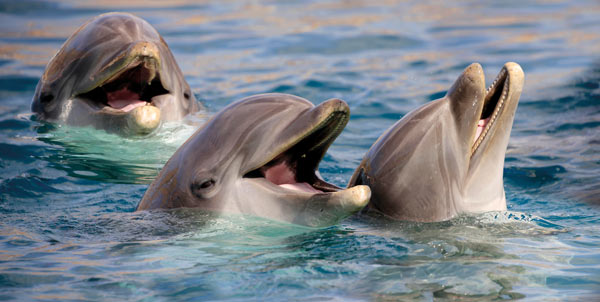
Dolphins, often confused with fish because of their usual presence in aquatic environments, are actually marine mammals belonging to the order Cetacea.
The first person to make a significant observation about their nature was Aristotle, the fourth-century B.C.E. Greek philosopher, who noted the similarities between cetaceans and other mammals, introducing the notion that these animals breathed air, unlike fish.
Dolphins possess lungs and not gills as fish do
Unlike fish, which use gills to extract dissolved oxygen from the water, dolphins possess lungs and must surface to breathe.
This respiratory mechanism represents one of the distinguishing characteristics of marine mammals.
When a dolphin emerges to take in oxygen, it also expels air through an opening located on the top of its head called the “spiracle.”
This adaptation allows dolphins to breathe effectively, minimizing time spent at the surface.
How dolphins communicate and their complex social behaviors
They are highly social animals that live in groups called herds, ranging in number from a few individuals to dozens.
Within a pod, dolphins interact through a variety of vocalizations, gestures and behaviors, creating strong bonds with each other.
Communication occurs through a complex system of sounds, body movements and behaviors.
They use whistles and other vocalizations to communicate with each other, express emotions, or warn of dangers.
Social interactions are essential to their survival and well-being, as they also facilitate cooperation in hunting and caring for their young.
Dolphin hunting techniques
To locate prey in the water, where visibility is reduced, dolphins use the biosonar: they produce special sounds, called clicks, and listen for their echo.
Generally, they feed on fish, squid and crustaceans. Among the most common prey are herring, sardines and cod.
Several hunting techniques are used to catch their food, including cooperative hunting and spiral hunting.
In this strategy, members of the school work together to herd fish into a small area, facilitating capture.
These techniques demonstrate not only the dolphins’ intelligence, but also their incredible coordination skills.
The life cycle of dolphins
The life expectancy of dolphins varies depending on the species and the conditions in which they live.
Baby dolphins are nursed for about 18 months and start swimming independently after a few weeks.
Pack members play a key role in caring for the young, offering support and protection.
In the wild, many dolphins live between 20 and 60 years however research indicates that some dolphin populations are declining at an alarming rate.
Dolphin populations in the Mediterranean are also declining due to habitat loss, overfishing, pollution and climate change.
Dolphin specimens in the Mediterranean Sea are also at risk
Several species can be seen in the Mediterranean Sea: the Bottlenose ( Tursiops truncatus), common dolphin(Delphinus delphis) and gray dolphin(Grampus griseus).
Their survival in our seas is threatened by several factors, including bycatch, water pollution and maritime traffic.
Commercial fishing, in particular, is a major threat, with fishing nets that can trap and drown these animals.
In addition, chemical and plastic pollution of marine waters harms not only dolphins but also the entire marine ecosystem, compromising the food chain of which they are a part.
Climate change, with rising temperatures and ocean acidification, is altering the distribution of fish species, further exacerbating the feeding situation of dolphins.
And again, increasing coastal urbanization and marine pollution have severely compromised these habitats, making it difficult for dolphins to find food and safe places to breed.
In a context of food scarcity, the chances of survival of these species are greatly diminished.
Beachings: dramatic and often fatal events
The causes of such phenomena can vary, including disease, disorientation, noise pollution, and panic triggered by human activities.
Noise caused by ships, underwater probes and other equipment can confuse dolphins, making them unable to navigate properly.
In addition, beachings may be the result of groups of dolphins following a sick or injured individual.
These events not only result in significant suffering for the animals involved, but also raise concerns about the health of dolphin populations and the quality of the marine environment.
The horror of dolphinariums
Dolphinariums are facilities designed to entertain the public through performances and interactions with dolphins.
However, the ethics of such institutions have been widely debated because cetaceans in captivity live in conditions that compromise their physical and psychological well-being, despite the fact that some dolphinariums promote conservation programs.
These animals, which swim thousands of miles in the wild, are often forced into confined spaces, depriving them of their normal social interactions and instinctive behaviors.
For this reason, the global community is increasingly moving toward policies to close and repurpose these facilities.
How to protect dolphins
To ensure the protection of dolphins, concrete and multidimensional measures are essential.
First, it is critical to implement and enforce strict regulations for fishing practices, minimizing bycatch.
Second, there is a need to invest in research and conservation of marine habitats, ensuring protected areas and marine sanctuaries where dolphins can live safely.
Finally, global efforts against marine pollution must be strengthened by promoting initiatives to reduce plastic use and improve wastewater treatment.
World Dolphin Day reminds us of the fragility of these extraordinary creatures and the responsibility we have to them even if they are animals with whom we cannot interact directly as with our dogs and cats.
In this regard, the veterinary doctors on our staff are always at your disposal: contact them for any needs or information that may be useful for the well-being of your beloved dog or cat.
Also, remember that Clinica La Veterinaria is always open h24 every day including holidays and with First Aid service from 8 pm to 8 am.
For the joy of seeing them HAPPY
©2026 -Text and image: Tiziana Genovese – Veterinary Technician
All rights reserved.