Tibetan Mastiff: a majestic mane that even lions would envy
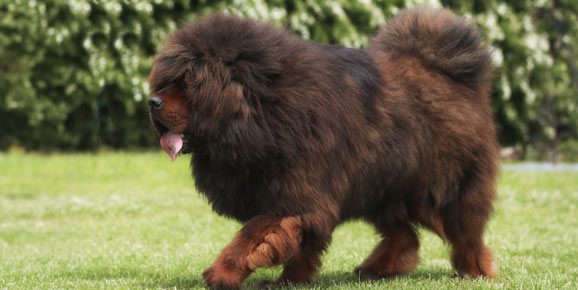
With its imposing build, flowing mane, and thick, lush coat, the Tibetan Mastiff (do-khyi) is a majestic and dignified dog.
This dog’s origins date back thousands of years: Aristotle was the first to mention it, describing it as the result of a cross between a tiger and a dog.
The Tibetan Mastiff was originally bred as a guard dog, although it was occasionally used to protect livestock.
From Tibet to the Rest of the World
It is likely that the breed left Tibet with Alexander the Great, who took Tibetan Mastiffs with him on his travels around the world.
The arrival of the first historically documented specimens dates back to 1828, when botanist Nathaniel Wallich imported them—already mature—from the city of Shigatse (now Xigazè) and presented them as a gift to King George IV.
Queen Victoria received one as a gift from India in 1847, and the Prince of Wales brought two to England in 1874.
By 1906, the breed was sufficiently widespread, but it was threatened following the Chinese invasion of Tibet, where, fortunately, enough animals survived in remote villages to sustain breeding programs in the United States.
Breed Recognition and Morphological Variability in Tibet
The American Kennel Club recognized the breed in 2006, establishing the standard that is valid in the West.
However, in Tibet, the size and build of a mastiff can vary greatly from one region to another, with significant differences in weight and coat.
Le singole popolazioni canine, infatti, hanno sviluppato adattamenti specifici alle condizioni ambientali in cui si sono trovate ma tutte sono accomunate da alcune caratteristiche tipiche.
Tibetan Mastiff: European lines and Chinese lines
European breeders have sought to preserve the breed type Do-Khyi type, namely a large but not giant dog weighing no more than 70 kg.
The Chinese breeding philosophy, on the other hand, favors extreme physical characteristics, with horses that have an exaggerated coat and an enormous mane, weighing between 80 and 100 kg.
This aesthetic trend has direct consequences for the health of Chinese Tibetan Mastiffs, which, moreover, often exhibit strong territorial behavior and can be difficult to manage.
In summary, the European Tibetan Mastiff is generally healthier and easier to handle, while the Chinese Tibetan Mastiff is often more impressive but less manageable, especially for inexperienced owners.
What is the Tibetan Mastiff’s temperament?
The Tibetan is not a particularly sociable dog by nature: it is independent, territorial, and wary of strangers.
It acts more like a silent guardian than a cuddly dog, but it is very protective, affectionate in a discreet way, and never intrusive.
He isn’t a “dog babysitter,” but he can be patient with children if he’s grown up with them, as long as they aren’t overly boisterous or noisy, since he might perceive rough play and loud noises as threats.
The Tibetan Mastiff is not a dog for apartment living
It requires plenty of outdoor space (yards and gardens) with a tall, sturdy fence because of its tendency to run away; generally speaking, it is not a dog suited for apartment living, especially in the city.
The Tibetan thrives in colder climates and suffers greatly in the heat.
Puppies need more physical activity, but once they’ve grown up, they sleep during the day.
They come alive in the evening when they take on the role of guard dogs, patrolling the perimeter of the property and the house to protect the family and the surrounding area.
In short, the Tibetan Mastiff is not a “gentle giant” but rather a primitive guard dog with a very strong territorial instinct, which can be an extraordinary companion only if handled competently.
Pathologies to pay attention to
Although it is an ancient and robust breed in its original form, the Tibetan Mastiff today suffers from a number of health conditions typical of large and giant-sized dogs, which are often exacerbated by modern breeding practices focused on aesthetics.
Among the most common problems are hip and elbowdysplasia, as well as orthopedic conditions such as osteochondritis and other skeletal developmental abnormalities.
Eye-related issues may include entropion, ectropion, and, more rarely, progressive retinal atrophy, while the very thick coat makes the dog prone to dermatitis.
Like many giant dog breeds, the Tibetan Mastiff is also at risk of gastric torsion, an acute and potentially fatal condition that requires careful prevention when managing their meals.
To bring your Tibetan Mastiff in for a follow-up visit, vaccinations, routine checkups, or specialist consultations, please contact the veterinarians on our staff, who are always available to assist you.
We would also like to remind you that Clinica La Veterinaria is always open h24 every day including holidays and with First Aid service from 8 pm to 8 am.