Table of Contents
The St. Bernard Dog: The Giant of the Alps
Native to the Alpine passes between Switzerland and Italy, the St. Bernard dog is a historic icon of mountain rescue.
This majestic dog is the very embodiment of courage and devotion, a living testament to the deep, millennia-old bond between humans and the mountains.
The Origins and History of the St. Bernard Breed
In the heart of the Great St. Bernard Pass, at an altitude of over two thousand meters, the monks of an ancient hospice offered shelter to pilgrims and merchants passing through.
To protect the settlement and help those who got lost in the snow, they began breeding sturdy dogs that were resistant to the cold and had an extraordinary sense of direction.
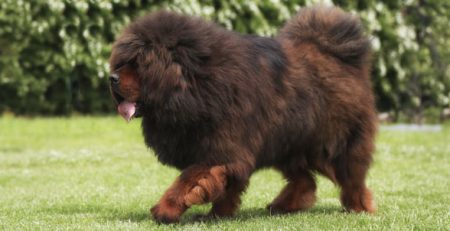
The St. Bernard gradually emerged from these crossbreeds between the Tibetan Mastiff, the Great Dane, and the Pyrenean dogs.
Over the years, this dog demonstrated exceptional skills in mountain rescue.
He was able to locate people swept away by avalanches or lost during storms by following clues invisible to the human eye.
His fame spread rapidly beyond the Swiss mountains, fueled by tales of heroic rescues passed down by travelers and soldiers.
Among the most famous dogs in history, one stands out: Barry, who lived in the early 19th century and is remembered for numerous rescue missions (over 40) in the Alps.
The St. Bernard Dog and His Little Barrel
One of the most famous elements associated with the image of the St. Bernard is the small barrel hanging around its neck.
Although there is no definitive evidence of its actual use in rescue operations, this accessory has become a universal symbol of the breed.
In popular culture, the barrel symbolizes the aid given to travelers exhausted by the cold and fatigue.
Recognition of the St. Bernard Dog Breed
In the 19th century, the breed was officially recognized, and a systematic program of selective breeding began.
In Switzerland, specialized registries and associations were established that helped define the dog’s physical and behavioral characteristics: a large build, a calm temperament, remarkable strength, and a natural protective instinct.
Physical Characteristics of the St. Bernard
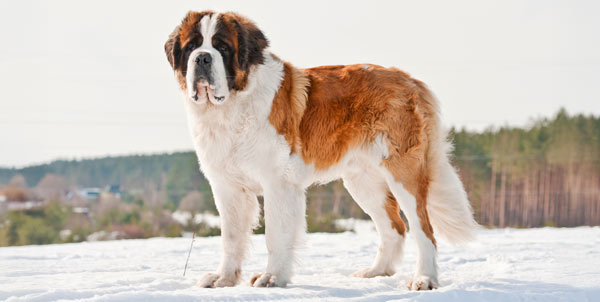
The Saint Bernard is a large dog, known for its sturdy and muscular build, which enables it to tackle the challenges of themountain environment.
Male specimens can reach a height at the withers of between 70 and 80 cm, while females are slightly smaller, with a height ranging from 65 to 75 cm.
The weight of an adult St. Bernard can range from 50 to 90 kg, depending on gender and genetics.
The St. Bernard’s Coat
It is generally white in color with brown, orange, or black spots.
The fur is thick, waterproof, and provides effective protection against the cold and inclement weather.
There are two coat types: the short-haired type, which requires less grooming, and the long-haired type, which needs regular brushing to stay healthy and clean.
Care and Feeding of the St. Bernard
St. Bernards need a balanced and nutritious diet specifically formulated for large breeds.
Portion sizes should be appropriate for your weight and activity level.
It’s important to avoid overfeeding him, since these dogs tend to gain weight easily.
A healthy diet and regular physical activity can help prevent heart or joint problems, such as hip dysplasia.
Character and Temperament of St. Bernards
Saint Bernards are sociable and friendly dogs, but they are also naturally protective, with a strong guarding instinct.
While always maintaining a calm and reassuring demeanor, they warn of danger without ever showing aggression.
Today, their role has evolved, and they are involved in therapy and care programs for people with disabilities, demonstrating their versatility beyond simple mountain rescue.
The Saint Bernard and “Urban” Life
It is a giant made for the great outdoors and can thrive in the city only if its care is entrusted to knowledgeable people who are able to provide it with adequate time and space.
In fact, because of its size, the St. Bernard should live in large houses with gardens.
It is very sensitive to heat, so in the summer it needs air-conditioned spaces and constant shade.
Cramped apartments and staircases can cause joint problems, especially during growth.
It needs long daily walks to stay healthy and prevent obesity.
So, this isn’t the ideal dog for people who live in small spaces or on upper floors without an elevator, for those who can’t stand drool on their furniture, long hairs on their carpets, or mud tracked in from the yard, or for those who aren’t physically strong enough to handle a 70 kg dog on a leash.
Managing a giant like that requires awareness and constant attention to its physical and mental well-being, starting with preventive care and treatment.
To bring your Saint Bernard in for a follow-up visit and periodic checkups, please contact the veterinarians on our staff, who are always available to assist you.
We would also like to remind you that Clinica La Veterinaria is always open h24 every day including holidays and with First Aid service from 8 pm to 8 am.