Cat Hug Day: is hugging a cat really a gesture of affection?
June 4 marksHug Your Cat Day, an anniversary that originated in the United States and has gradually spread to Europe as well, thanks to the viral power of social media and growing attention to animal welfare.
The initiative was conceived in the early 2000s by Jace Shoemaker-Galloway, a U.S. author who specializes in creating thematic days dedicated to pets.
The original intent was simple: to invite owners to show affection to their cats in an explicit way, turning an everyday gesture into a symbolic ritual.
However, the apparent harmlessness of the initiative opens up deeper questions.
Is hugging a cat really a gesture of affection?
Or are we imposing a typically human emotional communication on felines that is not always consistent with the animal’s welfare?
Hugging is a human code, not a feline one
Embrace, in human culture, is an act of affiliation and reassurance.
Ethologically, however, the cat does not use tight restraint as an affiliative behavior.
In contrast, in feline communication, the contact is voluntary and modulated, the approach is progressive the possibility of escape is fundamental to its sense of security.
Locking a cat in the arms is tantamount, for many individuals, to restriction of motor freedom.
And in the feline species, freedom of movement is a structural element of the perception of environmental control.
Individual differences: not all cats react the same way
However, it would be inaccurate to say that no cat likes a hug.
Tolerance to contact depends on the cat’s individual temperament, its level of socialization with its human, and physiological status.
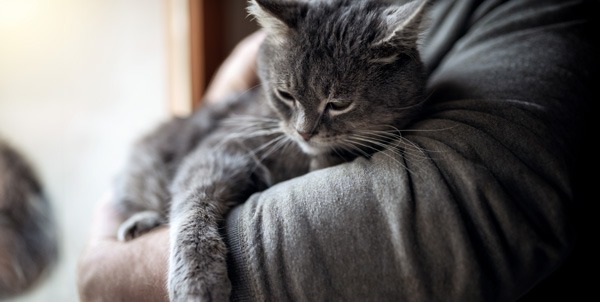
Some cats actively seek intense physical contact, relax in your arms and exhibit comfort signals (purring, half-closed eyes, relaxed muscles).
In such cases the embrace may be part of a consensual exchange.
Signs of distress: learning to read feline language
So, if Cat Hug Day really wants to promote wellness, it should include an educational component i.e., learning how to recognize kitty’s signs of stress.
Common indicators of discomfort during a hug:
- Laterally rotated or flattened ears
- Dilated pupils
- Swiftly agitated tail
- Rigid body
- Escape attempts
- Acute vocalizations
- Scratches or bites of “liberation”
These signals are not “whims,” but clear communications.
To ignore them is to superimpose our need for affection on the animal’s subjectivity.
Is it legitimate to hug a cat even when it shows signs of rejection?
From an animal welfare perspective, respect for behavioral autonomy is prioritized over human emotional gratification.
Forced hugging of a cat can produce:
- Increased stress
- Negative association with human contact
- Erosion of trust
- Defensive reactions
Instead of asking, “How can I hug my cat?” perhaps we should ask, “How can I show him affection in the way he understands?”
Alternatives to hugging: affection in a feline key
Showing love to a cat can take forms more consistent with its ethology:
- Targeted caresses in welcome areas (cheeks, base of ears)
- Interactive predatory gaming sessions
- Respect for personal space
- Environmental enrichment
A cat who chooses to climb on our lap is performing a voluntary act of trust.
It is qualitatively different from a cat raised against its will.
Educating children: a crucial aspect
Cat Hug Day can become an educational opportunity, especially for young children.
Explain to children that the cat is not a stuffed animal, that it has emotions and limits, and that it can say “no” through its body.
Early education fosters empathy and respect, preventing domestic incidents (scratching, biting) often caused by forced interactions.
Embrace as a privilege, not a right
Hugging is not a right of the owner, but a privilege granted by the animal.
When a cat allows itself to be hugged, it is implicitly declaring, “I feel safe with you.”
Cat Hug Day should evolve from a superficial celebration to a moment of awareness.
Instead of just clutching one’s cat, one could:
- Observe its body language
- Assess its comfort level
- Offer him an interaction that he freely chooses
- Improving the home environment
In this sense, the most authentic embrace might be a symbolic one: a safe, predictable, and respectful space.
And perhaps this is the most important reflection this day can offer us.
In this regard, the veterinary doctors on our staff are always at your disposal: contact them for any needs or information that may be useful for the well-being of your beloved cat.
We would also like to remind you that Clinica La Veterinaria is always open h24 every day including holidays and with First Aid service from 8 pm to 8 am.
For the joy of seeing them HAPPY
©2026 -Text and image: Tiziana Genovese – Veterinary Technician
All rights reserved.