The otter and the ingenious use of stones as a tool
The otter is a semiaquatic mammal belonging to the mustelid family, which also includes animals such as ferrets, weasels and badgers.
There are several species that differ greatly in terms of behavior, habitat and diet, demonstrating their adaptability to different aquatic environments:
– the European otter (Lutra lutra): widespread throughout much of Europe, it is characterized by a jointed body and thick fur.
– the North American one (Otter canadensis): an inhabitant of fresh and marine waters of North America, it is famous for its swimming and fishing skills.
– the Asian river one (Lutrogale perspicillata): found in various aquatic environments in South and Southeast Asia, it has more pronounced social habits than other species.
– and finally, that of the sea (Enhydra lutris): a symbol of the marine biodiversity of the Pacific coast of North America, it is unique in its behavior of using stones with which it opens mollusk shells, demonstrating truly advanced cognitive abilities.
– the Japanese otter (Lutra lutra whiteleyi): a subspecies of the European otter, threatened by habitat loss and pollution.
The appearance of the otter
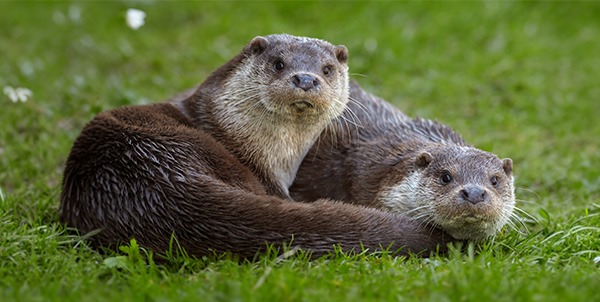
Otters have a tapered, jointed body with short, webbed legs; not surprisingly, they are excellent swimmers.
The length of an otter can vary greatly depending on the species, ranging from 70 cm to 1.5 meters, counting the tail, which can account for up to a third of the animal’s total length.
The head is relatively tiny compared to the body, with small, round ears that close to prevent water from entering.
The eyes, located high on the head, provide good vision both underwater and terrestrial.
This morphological adaptation allows them to move nimbly in water and climb steep terrain.
The spread of the otter around the world
The presence of these animals is influenced by several factors, including the availability of fresh water, the presence of prey, and habitat quality.
are found on all continents except Antarctica.
European otters are widespread throughout Europe, from Arctic to Mediterranean regions while North American otters occupy a wide range, from Alaska to Mexico; finally, sea otters are concentrated along the Pacific coast.
In Asia, several species can be found in both lake and coastal areas.
River otters prefer clean, well-oxygenated streams, while sea otters live in coastal waters where they can find an abundance of food such as sea urchins and shellfish.
Feeding: the cooperative hunting of otters
Otters are carnivores and their diet varies according to habitat and prey availability.
They generally feed on fish, amphibians, crustaceans, mollusks and small mammals.
They often hunt in groups, which increases their chances of success.
They use cooperative hunting techniques, where one part of the group distracts prey while others move in to capture.
In addition, otters are known to hide food in burrows or under rocks for later consumption.
The otter’s coat is one of its distinctive features
It consists of two layers: an outer layer of long, waterproof hair, and an inner layer of thick, soft fur that provides thermal insulation.
This double layer is essential to keep the otter warm in the cold waters in which it lives and swims.
Coat color varies by species, but generally ranges from dark brown to light beige, with variations that may include spots and shades.
This camouflage helps it hide from predators and surprise prey while hunting.
Instead, its long vibrissae allow it to locate prey even in muddy waters and at night.
But these are not the only peculiarities of these extraordinary animals.
Curiosities about otters
Otters hold on to each other by the legs while swimming so as not to lose sight of each other and also anchor themselves to the kelp fronds while sleeping so as not to be swept away by the currents.
Or again, they often wash prey by holding them on their chests and turning on themselves.
Such behavior not only helps remove any impurities, but is also a way for them to play and socialize with each other, showing a curious and playful side to their personalities.
The risk of extinction and sightings in Italy
Habitat loss, caused by deforestation, water pollution and urbanization, is one of the greatest threats to otter survival.
In many regions, conservation initiatives have been launched to ensure their long-term future, including protected areas and captive breeding programs.
The Eurasian otter in Italy has been protected since 1977 (Law No. 968 of 12/27/1977).
It is also classified as “Vulnerable” on the IUCN National Red List and is included in the “Bern Convention,” the 92/43/EEC “Habitats” Directive and CITES regulations.
In Italy, the otter population underwent a significant decline, reaching local extinction between 1975 and 2023 when, almost fifty years after their disappearance, an individual was caught on camera, a short distance from Rome.
In recent years, there have been significant efforts to monitor and protect otter populations, with happy events such as their long-awaited return to Italian rivers after decades of absence.
We can help otters by supporting organizations that protect their habitat and by choosing a more sustainable lifestyle to reduce climate impact.
Instead, for your dog or cat, the veterinary doctors on our staff are always available to you for vaccines, consultations, periodic check-ups: contact us for an appointment when the case requires it.
We would also like to remind you that Clinica La Veterinaria is always open h24 every day including holidays and with First Aid service from 8 pm to 8 am.
For the joy of seeing them HAPPY
©2026 -Text and image: Tiziana Genovese – Veterinary Technician
All rights reserved.